At a gala designed to worship power, privilege, and polished reputations, Stephen Colbert walked onto the stage and detonated a cultural earthquake that instantly divided the world into those who cheered him and those who wished he had never opened his mouth.
He accepted a Lifetime Achievement Award, but instead of the gentle comedy everyone expected, he delivered a raw, searing condemnation of unchecked wealth that made billionaires shift uncomfortably in their velvet chairs.

The moment felt like a cinematic plot twist — the glittering Manhattan ballroom, overflowing with high-level executives, venture-capital prodigies, entertainment moguls, and tech aristocrats, suddenly felt less like a celebration and more like a courtroom awaiting judgment.
Colbert paused, scanning the room with the steady calm of someone who already knew he was about to make people furious, uncomfortable, inspired, and ashamed, all within the span of one paragraph.
Then he delivered the line that detonated the room’s fragile ego: “If fortune has favored you, then let that fortune serve the world — because excess is not a trophy, it is an unpaid debt.”
The sentence hung in the air like smoke after an explosion, drifting slowly across tables where diamonds sparkled, champagne glowed, and the illusion of moral comfort shattered in an instant.
Witnesses say several of the evening’s wealthiest donors looked stunned, as if the host they had celebrated for years had suddenly become a mirror they desperately did not want to look into.
One Silicon Valley magnate reportedly muttered beneath his breath, “This isn’t what we paid for,” proving precisely why the speech mattered more than anyone realized.
Colbert did not smile, did not soften his tone, and did not offer anyone a comfortable exit route from the truth he had just thrown like a challenge across the ballroom floor.
Instead, he doubled down, declaring that society had grown too comfortable with applauding wealth while ignoring the children, workers, and families whose suffering finances the luxury enjoyed by global elites.

The silence that followed was not passive; it was hostile, electric, full of unspoken tension from people unaccustomed to being scolded by someone they expected to entertain them.
Colbert’s next sentence, delivered slowly as if inviting each listener to wrestle with it, ignited even more outrage: “We cannot celebrate wealth while children are still struggling to survive, and pretending otherwise is the greatest fiction we have ever written.”
For a moment, the camera lights softened, the band paused, and even the staff hovering along the walls sensed they were witnessing history disguised as an awards ceremony.
What made the moment even more polarizing was that Colbert wasn’t speaking to politicians, ideologues, or activists — he was speaking directly to the people whose empires shape the global economy.
It was a speech designed not for applause but for awakening, and awaken it did, splitting social media into factions that began battling online before the gala even ended.
Some praised him as a moral giant speaking truth in a room built to hide it, while others accused him of hypocrisy, ego, and using outrage as a branding tool — a narrative that spread within minutes across major platforms.
But then the second explosion came, the one no one expected, the one that transformed Colbert’s words from rhetoric into revolution.
Just an hour after leaving the stage, the Colbert Foundation announced a $10 million humanitarian initiative focused on education, emergency housing, pediatric healthcare, and trauma support across underserved regions in South America and the Middle East.
The announcement blindsided critics who had assumed his speech was performative grandstanding, revealing instead a strategic declaration backed by real, immediate action.
News outlets scrambled to rewrite their headlines, influencers began reposting the announcement with shock emojis, and analysts rushed to argue whether this was moral leadership or a masterclass in public influence.
But for millions watching online, the message was clearer than any headline: Stephen Colbert had not come to entertain — he had come to provoke, disrupt, and redefine what it means to hold power responsibly.
Within hours, hashtags like #ColbertChallenge and #WealthHasADuty began trending, sparking debates about whether celebrities have an obligation to publicly shame the billionaire class.
Commentators fought over whether Colbert had crossed a line, accusing him of humiliating the very donors who fund philanthropic networks, while others argued that the wealthy should finally feel exactly that discomfort.
One viral post captured the emotional divide: “If the richest people in the world cannot handle one honest sentence, maybe they’re not rich in the ways that matter.”
Meanwhile, a leaked memo from a major tech investor circulated online, describing the event as “a grotesque ambush disguised as moral virtue,” fueling speculation about potential backlash from corporate power brokers.
Yet the public response leaned overwhelmingly toward admiration, with millions sharing clips of Colbert’s speech alongside their own reflections on inequality, compassion, and the moral emptiness of excess wealth.
Younger audiences, especially, transformed the moment into a cultural rallying cry, turning quotes from the speech into TikTok soundbites, bold graphics, and remixed music tracks that spread globally within hours.
Some activists called it “the Colbert Doctrine,” referring to the belief that moral pressure, applied publicly and unapologetically, can force the wealthy to confront the human cost of their privilege.
By dawn, the gala was no longer the story — the story was the firestorm it unleashed, a debate stretching across continents about whether society should expect more from those who possess more.
Economists weighed in, arguing that philanthropic speeches rarely create lasting change unless they are tied to structural reforms and sustained accountability — something they challenged Colbert to champion next.
Others insisted that moments like this serve as cultural catalysts, reminding the public that silence in the face of injustice is complicity, regardless of whether you hold political office or simply hold influence.
But the most controversial part of the night came from a backstage witness who claimed Colbert told an aide, “If they’re angry, it means they heard me — and that’s the first step toward anything actually changing.”

Critics called the remark arrogant, while supporters viewed it as a manifesto, a declaration that truth must be spoken even if it dismantles comfort.
As the world continues to debate his intentions, methods, and tone, one fact stands uncontested: Stephen Colbert forced a global conversation that powerful people have spent decades avoiding.
And whether he becomes a hero, a villain, or the most disruptive entertainer of his generation depends entirely on how the world chooses to interpret the moment he decided to confront wealth instead of celebrate it.
Yet in the chaos, one sentence remains etched into the digital bloodstream: “Wealth means nothing if it doesn’t lift someone else up,” a line already being quoted as if it belongs in history books rather than award shows.
Tonight, Stephen Colbert did more than shine — he cracked open a mirror, held it to those who shape the world, and demanded they look directly at the reflection they have long ignored
Sad news: Thirty minutes ago in Bills, the family of former Buffalo Bills legend Marv Levy, aged 100, unexpectedly announced that he has passed away… – lunglinh
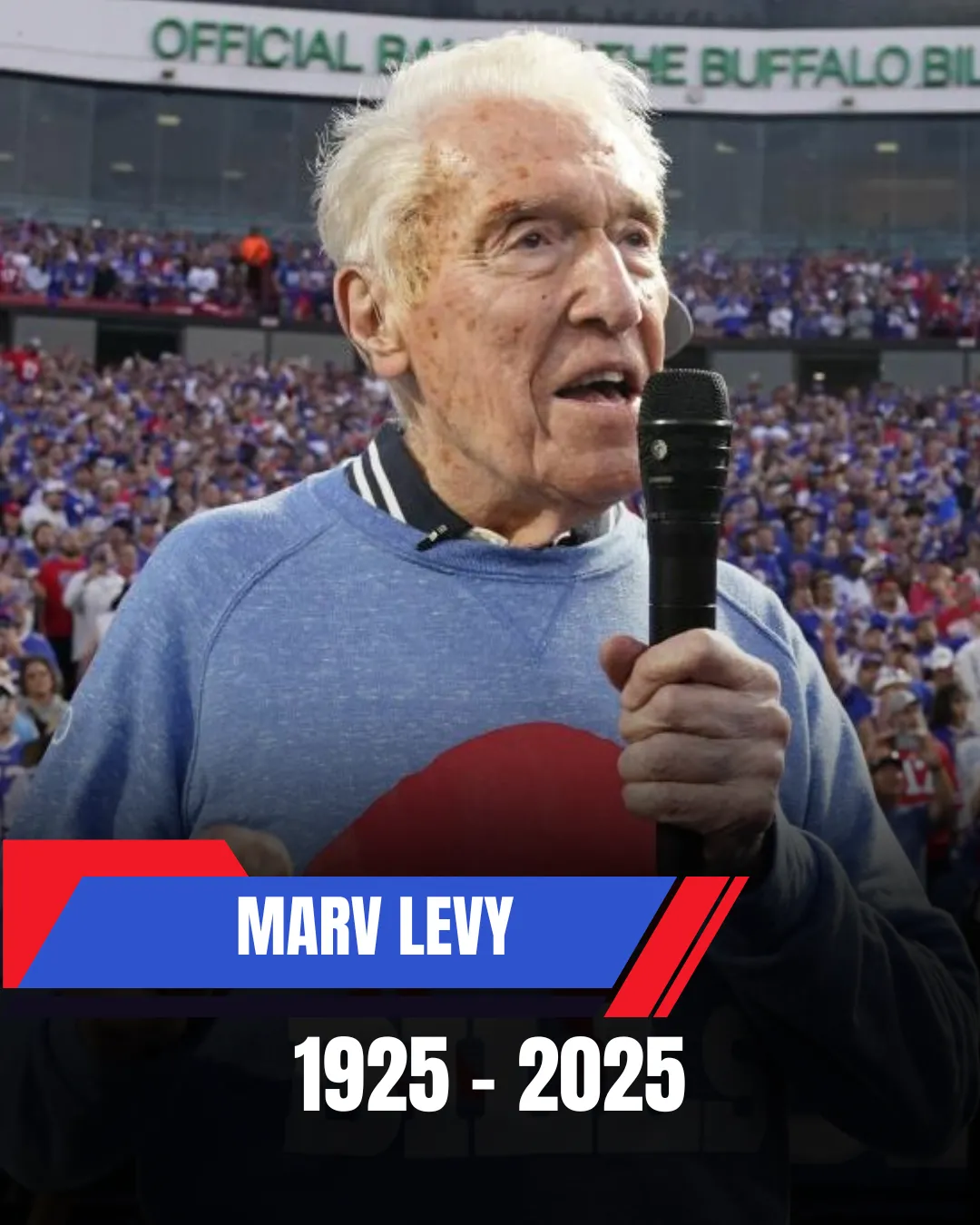
A Heartbreaking Announcement That Sends Shockwaves Through Buffalo
Thirty minutes ago, the Buffalo Bills community was shattered by the heartbreaking and unexpected announcement that former legendary head coach Marv Levy has passed away at the age of 100. The news, shared quietly through a brief family statement, spread through Bills Mafia faster than wildfire, leaving fans across New York and the entire NFL landscape stunned. Though Levy had reached a remarkable milestone age, the suddenness of the announcement caught everyone off guard. For the Bills—an organization that has long embraced its history and revered its foundational leaders—the loss feels monumental. Levy wasn’t just one of the greatest coaches in franchise history; he was the architect of Buffalo’s proudest era, the face of discipline and determination, and the beating heart behind one of football’s most unforgettable dynasties. The sense of grief sweeping through Bills Nation is profound, raw, and deeply emotional, as fans, players, and coaches struggle to grapple with what many describe as “the end of an era.”
The Architect of an Unmatched Legacy Built on Heart and Resilience
Marv Levy’s place in NFL history is not merely about wins or championships—it is about the spirit he instilled in Buffalo, a spirit that became synonymous with perseverance. Taking over a struggling franchise in the late 1980s, Levy transformed the Bills into one of the most formidable teams in football. His leadership spearheaded Buffalo’s iconic run to four consecutive Super Bowl appearances—an achievement unmatched in league history and a testament to his brilliance, consistency, and ability to motivate his players through even the most grueling seasons. Levy embodied mental toughness and emotional intelligence long before those terms became coaching buzzwords. His approach was rooted in preparation, respect, and a philosophy that emphasized the soul of the team as much as its strategy. Players often said that Levy coached them not just as athletes but as men, instilling values that stayed with them long after their playing days were over. In Buffalo, his legacy is not defined by unfinished business—it is defined by the incredible heights he lifted the franchise to, and the belief he sparked in millions.
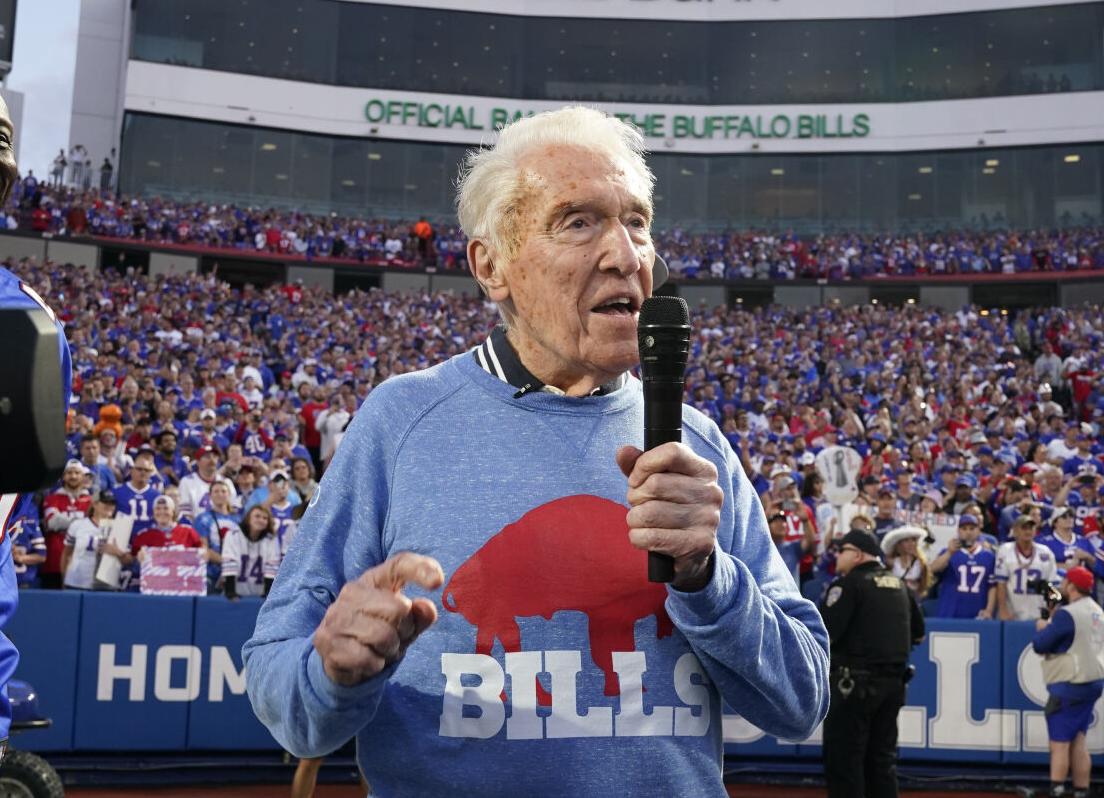
A Leader, a Scholar, and a Man of Extraordinary Character
One of the most remarkable parts of Marv Levy’s legacy was his identity beyond football. Known for quoting literature, referencing history, and bringing a thoughtful, almost poetic presence to the sidelines, Levy was unlike any other coach of his era. He saw football as both art and battle, strategy and heart, and his players revered him for his depth of knowledge and compassion. His long career, spanning the CFL and NFL, earned him respect across borders, generations, and rival teams. And even after retiring, he remained connected to the sport, offering commentary, mentoring young coaches, and staying involved with community programs throughout Buffalo and beyond. His reputation was spotless, his integrity uncompromised, and his generosity widely admired. Unlike many legends, Levy stayed deeply beloved long after the spotlight faded, becoming a symbol of leadership, grace, and service. That is why the news of his passing has left such a deep emotional mark—not just on Bills fans but on football lovers nationwide who recognized the greatness of the man behind the headset.
Bills Mafia Responds With Unmatched Emotion and Unity
Few fanbases in professional sports are as passionate or as tightly bonded as Bills Mafia, and today, that unity has taken on a somber but powerful tone. Within minutes of the announcement, thousands of messages began appearing across social media—stories from fans who met Levy briefly at a charity event, who grew up watching his teams, or who heard their parents talk about the glory days of the early ’90s with reverence. Outside Highmark Stadium, a small crowd quickly formed, placing flowers, candles, handwritten letters, and vintage Bills gear at the entrance. Children wearing modern Josh Allen jerseys stood beside older fans wearing worn-out Jim Kelly or Thurman Thomas shirts, all united by a shared sense of loss and appreciation. Some fans emotionally recalled Levy’s famous quote: “Where else would you rather be than right here, right now?” Today, those words feel heavier, symbolic of a man who gave everything to Buffalo—and who will forever remain part of its identity. The stories being shared are filled with warmth, gratitude, and admiration, painting a picture of a man whose impact reached far beyond stats and records.
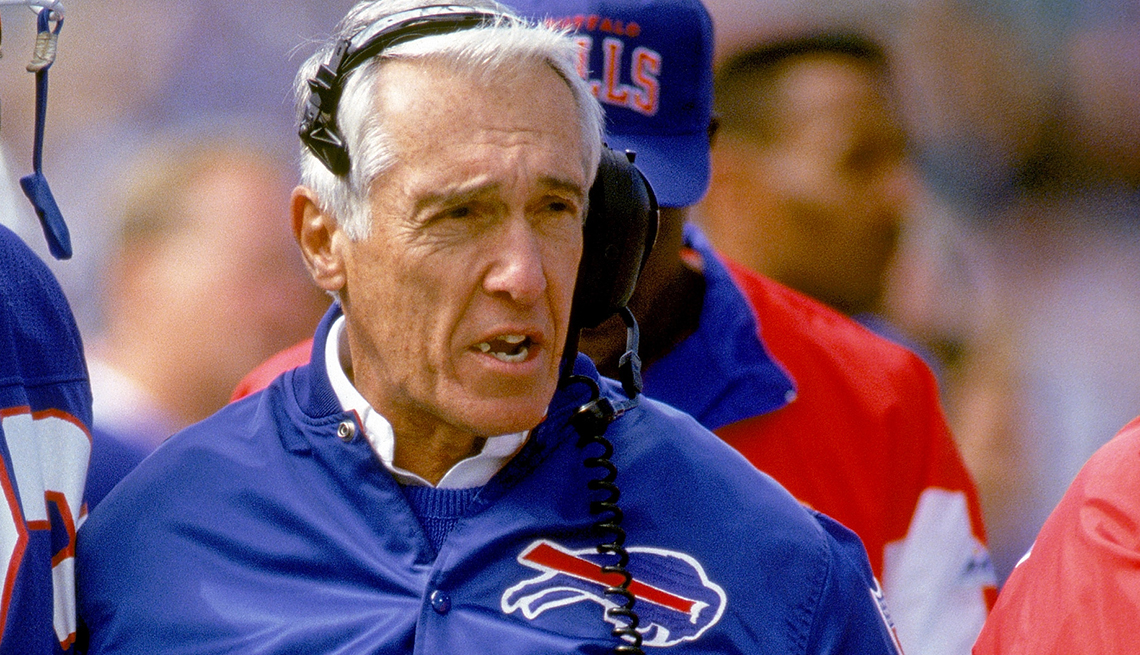
Inside the Bills Organization: Heavy Hearts and Deep Respect
Sources inside the Bills facility described the atmosphere as “silent” and “somber.” Team owner Terry Pegula reportedly addressed the staff privately, emphasizing how profoundly Levy shaped the organization and promising that the team would put together an extensive tribute to honor him. Head coach Sean McDermott was said to be deeply moved, having frequently cited Levy’s philosophy as an inspiration for his own leadership style. Current and former Bills players expressed their condolences publicly, many stating that the culture Levy built still echoes through the building today, influencing every practice, meeting, and game day. Several members of the 1990s Bills teams immediately contacted each other, coordinating plans to travel to Buffalo for a joint tribute, while Jim Kelly—Levy’s quarterback and longtime friend—posted a message expressing heartbreak, gratitude, and love for his former coach. Inside the locker room, the younger generation of Bills players, many of whom know Levy only through documentaries and team history, paused meetings to reflect on the legacy of the coach who paved the way for their success today. The sense of mutual respect and shared grief permeated every corner of the organization.
A Final Farewell to a Legend Whose Influence Will Forever Shape Buffalo
As Bills fans brace for the coming tributes—video montages, moments of silence, and memorials—the magnitude of Marv Levy’s legacy becomes clearer with each passing hour. He wasn’t simply an NFL coach; he was the heart and soul of a franchise, the embodiment of a city’s resilient spirit, and a guiding figure who shaped an entire generation of players. His leadership defined an era, his words inspired millions, and his presence gave Buffalo a sense of identity it still carries today. There will likely be a statue, a ceremony, and long-term memorial projects, but the truest tribute will be seen every Sunday when the Bills take the field with the toughness, unity, and heart that Levy instilled. Though the world mourns today, it also celebrates the extraordinary life of a man who lived with purpose, honor, and passion. Marv Levy may be gone, but his legacy lives on—in Buffalo’s history, in the DNA of the Bills organization, and in the hearts of every fan who ever believed in the team because of him. Legends never truly leave us—they remain in every story, every memory, and every roar of the crowd that carries their spirit forward.

Leave a Reply